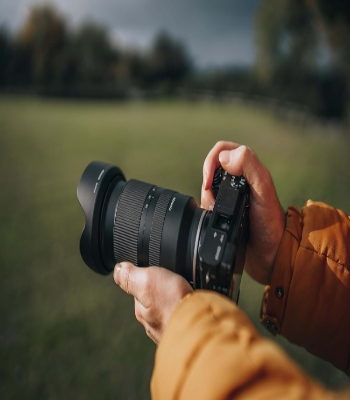
Wide Angle Lens for Sony APS-C Mirrorless Camera Photography
If you are searching for the wide angle lens for Sony APS-C mirrorless camera photography, you’re probably asking questions like: What focal length is considered wide? Which lens should I buy? How wide is too wide? When should I use it?
I remember asking these same questions when I first wanted to shoot landscapes and travel photos. I quickly realized that choosing the right wide-angle lens completely changed how my photos looked and felt.
In this detailed beginner-friendly guide, I’ll walk you through:
How to buy the right one
What a wide-angle lens really is
How it works on Sony APS-C cameras
Which focal lengths are best
Recommended lenses
How to use it creatively
Mistakes to avoid
What Is a Wide Angle Lens?
A wide-angle lens captures a broader field of view compared to standard lenses.
In simple terms:
It is perfect for landscapes, architecture, interiors, and travel.
You can fit more into your frame.
How Wide Angle Lenses Work on Sony APS-C Cameras
Sony APS-C mirrorless cameras have a 1.5x crop factor.
That means:
- 10mm behaves like 15mm equivalent.
- 16mm behaves like 24mm equivalent.
Popular Sony APS-C cameras include:
- Sony Alpha a6400
- Sony Alpha a6600
- Sony Alpha a6700
They use the Sony E-mount system.
Understanding crop factor helps you choose correctly.
Why Use a Wide Angle Lens for Sony APS-C Mirrorless Camera Photography?
Let me explain how I personally use wide-angle lenses.
1. Landscape Photography
When I want to capture:
- Mountains
- Beaches
- City skylines
- Dramatic skies
A wide-angle lens allows me to include foreground and background together.
2. Travel Photography
When traveling, space is limited. Wide lenses help capture:
- Streets
- Markets
- Historic buildings
- Scenic viewpoints
3. Interior Photography
Small rooms look bigger with wide lenses.
4. Creative Perspective
Wide lenses exaggerate depth. Objects closer appear larger. Background feels farther away.
This creates dramatic and immersive images.
Best Focal Lengths for Wide Angle Photography on APS-C
Here is a simple guide:
| Type | Focal Length (APS-C) | Best For |
| Ultra-Wide | 10–12mm | Landscapes, interiors |
| Wide | 14–16mm | Travel, street |
| Moderate Wide | 18–20mm | Everyday wide shots |
Because of crop factor:
16mm = 24mm equivalent
11mm = 16.5mm equivalent
Best Wide Angle Lens for Sony APS-C Mirrorless Camera Photography
Let is look at trusted options.
Best Prime Wide-Angle Lens
Sigma 16mm f/1.4 DC DN Contemporary
Why I recommend it:
- Bright f/1.4 aperture
- Great for low light
- Sharp image quality
- Excellent for YouTube and night photography
This lens is extremely popular among APS-C users.
Best Ultra-Wide Prime Option
Sony E 11mm f/1.8
Why it is impressive:
- Very lightweight
- Ultra-wide view
- Great for vlogging
- Fast autofocus
Perfect if you love dramatic wide shots.
Best Wide-Angle Zoom Lens
Sony E 10-20mm f/4 PZ G
Why it’s flexible:
- Zoom versatility
- Lightweight
- Power zoom for video
- Great for travel
If you prefer flexibility over fixed focal length, zoom is ideal.
What Aperture Should You Choose?
Aperture affects:
- Low-light performance
- Background blur
Lower number (f/1.4 or f/1.8):
- Better for night photography
- More creative control
Higher number (f/4):
- Lighter lens
- Usually cheaper
- Good for daylight shooting
If you shoot indoors or at night, choose wider aperture.
How I Use a Wide Angle Lens Creatively
Here are techniques I personally use:
1. Include Foreground Elements
Place something close:
- Rocks
- Flowers
- Leading lines
This creates depth.
2. Use Leading Lines
Roads, rivers, and pathways guide the viewer’s eye.
3. Get Close to Your Subject
Wide lenses exaggerate perspective when close.
4. Keep Horizon Straight
Wide lenses can distort perspective.
Common Mistakes Beginners Make
Let me help you avoid errors:
Standing too far from subject
Ignoring distortion
Tilting camera upward too much
Overcrowding the frame
Forgetting crop factor
Should You Buy Prime or Zoom Wide Lens?
Prime:
- Sharper
- Better low light
- Lightweight
Zoom:
- Flexible
- Convenient
- Great for travel
If you’re starting, zoom is easier.
If you want quality and creativity, prime is excellent
When Should You Use a Wide Angle Lens?
Use it when:
- Shooting landscapes
- Capturing cityscapes
- Photographing small rooms
- Shooting dramatic travel scenes
- Creating environmental portraits
Avoid it when:
Trying to isolate distant subjects
Shooting tight portraits
Wide Angle Lens for Sony APS-C Mirrorless Camera Photography – Buying Checklist
Before buying, ask yourself:
- What do I shoot most?
- Do I need low-light capability?
- Do I want zoom flexibility?
- Is weight important?
- What is my budget?
Answering these helps narrow your choice.
1. What is the best focal length for wide angle on Sony APS-C?
Between 10mm and 16mm works great for most wide photography needs.
2. Is 16mm wide enough on APS-C?
Yes, it equals about 24mm full-frame equivalent — good for landscapes and travel.
3. Are wide angle lenses good for portraits?
Not for traditional portraits, but they work well for environmental portraits.
4. Do wide lenses distort images?
Yes, especially at ultra-wide focal lengths. You must compose carefully.
When I bought my first wide angle lens, it changed how I saw photography.
Instead of zooming in, I started stepping closer.
Instead of isolating subjects, I included the environment.
A wide angle lens for Sony APS-C mirrorless camera photography opens creative possibilities you may not even realize yet.
Choose wisely based on your needs, not just specifications.